


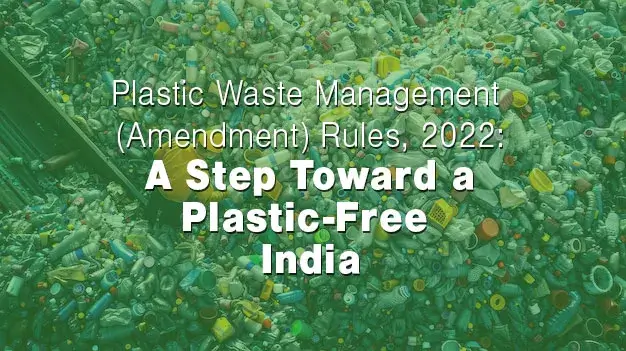
India generates over 3.4 million tonnes of plastic waste annually, with only 30% being recycled (CPCB, 2020). To combat this crisis, the Ministry of Environment, Forest and Climate Change (MoEFCC) introduced the Plastic Waste Management (Amendment) Rules, 2022, strengthening the 2016 framework. This landmark policy shifts accountability to producers, brands, and consumers to reduce plastic pollution and promote a circular economy. Let’s dive into the key features, implications, and challenges of this amendment.
What’s New in the 2022 Amendment?
1. Ban on Single-Use Plastics (SUPs)
The amendment enforces a phased ban on 19 single-use plastic items identified as having low utility and high environmental impact. These items were chosen based on their prevalence in litter, non-recyclability, and contribution to microplastic pollution. By eliminating these products, India aims to reduce plastic waste generation by 1.5 million tonnes annually (MoEFCC, 2022). The banned items include:
- Plastic cutlery (forks, spoons, knives)
- Earbuds with plastic sticks
- Candy and ice-cream sticks
- Polystyrene (thermocol) for decoration
- Plastic banners under 100 microns
Source: MoEFCC Notification, February 2022 (Click here for the official gazette).
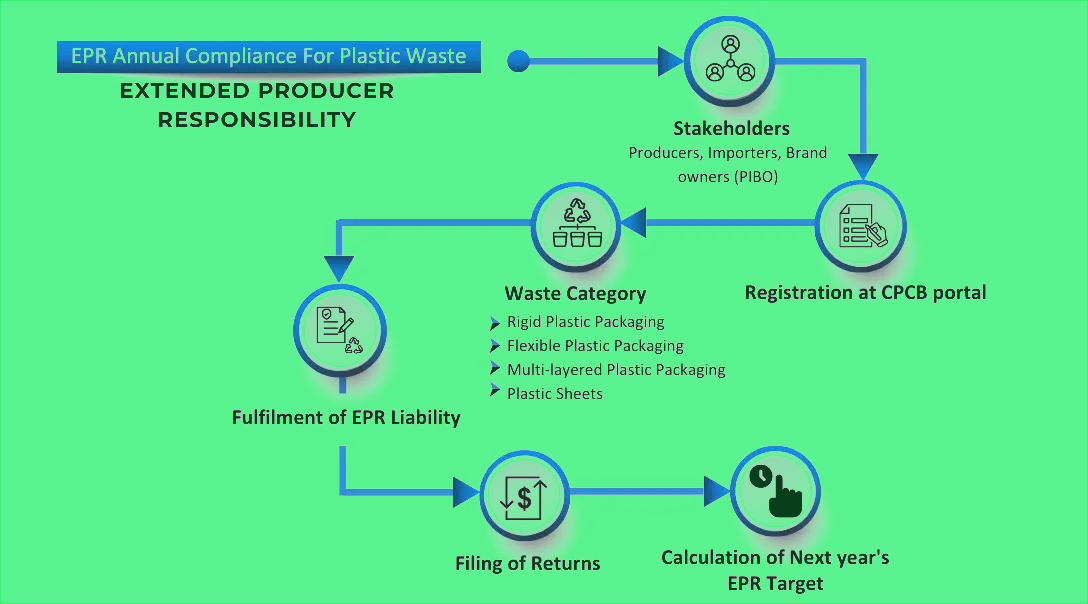
2. Extended Producer Responsibility (EPR)
To ensure accountability, producers, importers, and brand owners (PIBOs) must now meet mandatory EPR targets for plastic packaging waste. These targets are designed to phase in responsibility gradually, allowing industries time to adapt while prioritizing high-impact materials like rigid plastics. Key requirements include:
- Recycling Targets:
- 2024-25: 50% of rigid plastic waste recycled.
- 2025-26: 70% of rigid plastic waste recycled.
- Reuse Targets:
- 30% of rigid plastic packaging must be reused by 2025.
Source: CPCB Guidelines on EPR, 2022.
3. Plastic Packaging Categories
The rules classify plastic packaging into four categories to streamline recycling and ensure targeted waste management strategies. This categorization helps recyclers and producers identify viable methods for processing each type of plastic. The categories are:
- Rigid Plastic (e.g., bottles, containers).
- Flexible Plastic (e.g., carry bags, wrappers).
- Multi-Layered Plastic (e.g., chip packets, shampoo sachets).
- Compostable Plastic (must meet BIS standards).
4. Centralized EPR Portal
To enhance transparency and compliance, the Central Pollution Control Board (CPCB) launched an online EPR portal. This digital platform serves as a one-stop solution for companies to register, submit annual returns, and report recycling progress. It also enables authorities to monitor real-time data and address gaps in implementation.
Source: CPCB EPR Portal (https://eprportal.cpcb.gov.in/).
5. Penalties for Non-Compliance
To deter negligence, the amendment introduces strict penalties. Companies failing to meet EPR targets face environmental compensation fees, which escalate annually. Repeat offenders risk business license cancellations, ensuring accountability across the supply chain.
Why This Amendment Matters
- Environmental Impact:
- Reduces plastic leakage into rivers and oceans. India’s Ganga and Yamuna rivers are among the top 10 most plastic-polluted globally (UNEP, 2021).
- Cuts greenhouse gas emissions from plastic production and incineration.
- Economic Opportunities:
- Boosts the recycling industry, projected to grow to $60 billion by 2025 (FICCI, 2022).
- Creates jobs in waste collection and processing sectors.
- Global Alignment:
- Aligns with the UN Sustainable Development Goals (SDG 12 and 14) on responsible consumption and marine conservation.
Challenges in Implementation
While the amendment is a progressive step, its success depends on overcoming systemic hurdles. Below are the key challenges stakeholders face:
- Lack of Infrastructure:
India has only 1,500 registered plastic recyclers, insufficient to handle the 9,400 tonnes of daily plastic waste (CPCB, 2022). - Cost Burden on SMEs:
Small businesses struggle with EPR compliance due to high recycling costs and complex documentation. - Consumer Awareness:
A 2022 survey by TerraCycle revealed that 65% of Indians are unaware of proper plastic waste segregation methods. - Multi-Layered Plastic (MLP) Recycling:
MLP (used in chips and biscuit packets) remains difficult to recycle due to its mixed-material composition.
Success Stories
Despite challenges, several organizations are leading the way in sustainable practices. These examples highlight the potential for scalable solutions:
- Tata Consumer Products:
Achieved 100% recyclable packaging for its Tetley tea brand and invested in MLP recycling partnerships. - Unilever India:
Launched “Shudhta Ke Vaaste” to collect and recycle 100,000 tonnes of plastic by 2025. - Startups Like Banyan Nation:
This Hyderabad-based company uses AI to track and recycle 12,000 tonnes of plastic annually.
The Road Ahead
To ensure the amendment’s long-term impact, India must adopt a multi-pronged approach:
- Strengthen Recycling Infrastructure:
Invest in material recovery facilities (MRFs) and promote public-private partnerships. - Incentivize Innovation:
Subsidize R&D for alternatives like biodegradable plastics and edible cutlery. - Behavioral Change Campaigns:
Leverage campaigns like Swachh Bharat Mission to educate citizens on plastic segregation. - Global Collaboration:
Adopt best practices from countries like Germany and Japan, which recycle 65% and 85% of their plastic waste, respectively.
Conclusion
The Plastic Waste Management (Amendment) Rules, 2022, mark a bold step toward curbing India’s plastic crisis. While challenges persist, the policy’s success hinges on collaboration between governments, businesses, and citizens. By embracing innovation and accountability, India can pave the way for a sustainable, plastic-free future.