



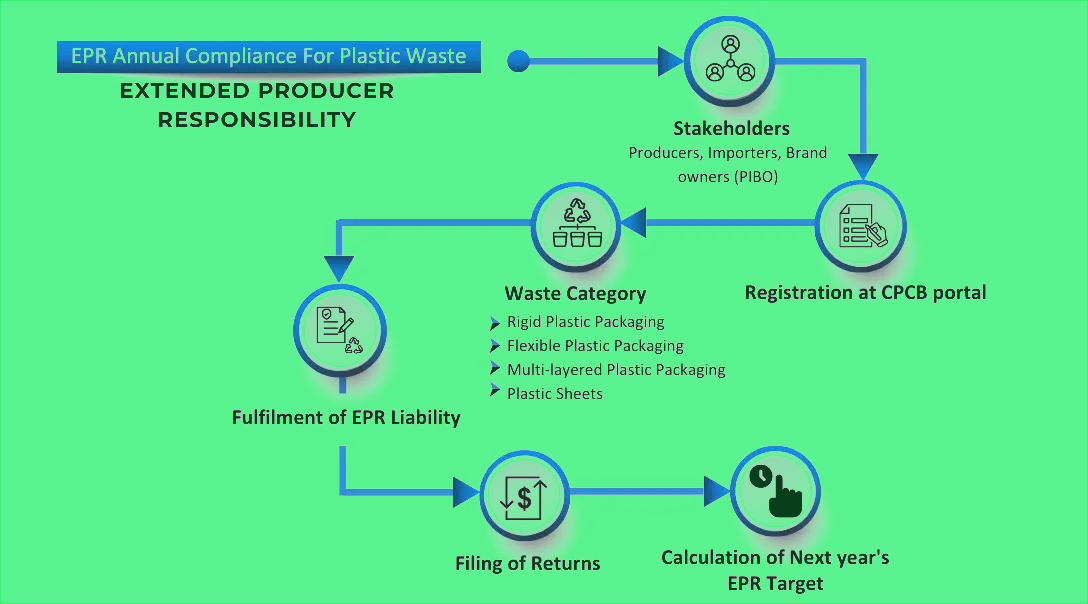
Extended Producer Responsibility (EPR) is a critical regulatory framework designed to address the escalating challenges of plastic waste management. For producers, importers, and brand owners (PIBOs), adhering to EPR annual compliance is not just a legal obligation but also a step towards sustainable environmental practices. This blog provides an in-depth overview of EPR annual compliance for plastic waste, its significance, and how businesses can effectively meet these requirements.
What is EPR Annual Compliance?
EPR annual compliance refers to the mandatory submission of reports and documentation by PIBOs to demonstrate adherence to plastic waste management regulations. These regulations ensure that companies take responsibility for the lifecycle of their plastic products, from production to post-consumer waste management.
Why is EPR Compliance Important?
- Legal Obligations: EPR compliance is mandated under the Plastic Waste Management (PWM) Rules, 2016, and subsequent amendments in India. Non-compliance can lead to legal penalties.
- Environmental Impact: Proper compliance ensures reduced plastic pollution and promotes recycling and sustainable waste management practices.
- Corporate Social Responsibility (CSR): EPR compliance aligns with CSR goals, enhancing a company’s reputation as an environmentally responsible entity.
Key Components of EPR Annual Compliance
- Registration:
- Companies must register with the Central Pollution Control Board (CPCB) or the State Pollution Control Board (SPCB), depending on their operations.
- The registration process requires submission of detailed information about the company’s plastic usage and waste management practices.
- Plastic Waste Collection Targets:
- PIBOs are assigned annual targets for the collection and recycling of plastic waste based on the quantity of plastic introduced into the market.
- These targets are set to ensure that producers take responsibility for managing their waste.
- Recycling and End-of-Life Disposal:
- Companies must establish partnerships with recycling agencies or set up reverse logistics systems to ensure proper disposal of plastic waste.
- Documentation of recycling and co-processing activities is crucial for compliance.
- Annual Report Submission:
- Companies are required to submit an annual EPR compliance report detailing their achievements in plastic waste collection, recycling, and disposal.
- The report must include evidence such as certificates from authorized recyclers and details of extended collection systems.
- Audit and Verification:
- Independent audits are conducted to verify the accuracy of the submitted reports and the effectiveness of waste management practices.
Steps to Ensure EPR Annual Compliance
- Understand the Regulations:
- Familiarize yourself with the PWM Rules, 2016, and their amendments to understand the specific requirements for your business.
- Set Up a Waste Management System:
- Implement a robust system for collecting, segregating, and recycling plastic waste. Collaborate with authorized waste management partners.
- Maintain Accurate Records:
- Keep detailed records of plastic production, usage, recycling, and disposal activities.
- Engage Authorized Recyclers:
- Partner with certified recyclers and co-processors to ensure proper waste treatment and disposal.
- Submit Timely Reports:
- Prepare and submit your EPR compliance report before the deadline to avoid penalties.
Challenges in EPR Compliance
- Complex Regulations: Navigating the intricacies of EPR rules and amendments can be challenging for businesses.
- Lack of Infrastructure: Inadequate waste management infrastructure in certain regions may hinder compliance efforts.
- High Costs: Setting up collection and recycling systems can be resource-intensive.
Future of EPR Compliance
With increasing global focus on sustainability, EPR compliance is expected to evolve with stricter regulations and higher targets for plastic waste management. Businesses must stay updated with policy changes and adopt innovative solutions to meet compliance requirements efficiently.
Conclusion
EPR annual compliance for plastic waste is a significant step towards achieving a circular economy and reducing the environmental impact of plastic pollution. By understanding the regulations and implementing effective waste management strategies, businesses can fulfill their EPR obligations and contribute to a sustainable future. For organizations navigating the complexities of compliance, seeking professional guidance can simplify the process and ensure adherence to all requirements.


wonderful publish, very informative. I wonder
why the other specialists of this sector don’t
understand this. You must proceed your writing. I’m confident, you have a
great readers’ base already!